About us
The Decolonised Dictionary of the Portuguese Language is an open, collaborative and evolving resource that reimagines how Portuguese is documented and shared. Built by and for its global community of speakers, the dictionary highlights the richness of Portuguese in its many forms—European, Brazilian, African, Asian and diasporic—embracing local varieties, creoles, neologisms and everyday expressions often absent from traditional lexicons.
By foregrounding contributions from across the Lusophone world and beyond, the project challenges inherited hierarchies of prestige and centres the lived realities of speakers. It treats Portuguese not as a single, fixed standard but as a dynamic network of linguistic and cultural practices shaped by history, migration and exchange.
Our goal is to create a participatory space where researchers, students, educators and communities can document, celebrate and debate the language in all its diversity. Through this collaborative approach, the dictionary aims to support more inclusive scholarship, foster intercultural understanding and give visibility to the voices, words and worlds that make up contemporary Portuguese.
Featured words
English
Words have a life of their own. They travel through time, change through use, change those who use them and the system they integrate.
In this section, we highlight words that are part of the lives of Portuguese speakers in different parts of the world. We invite people from the most varied backgrounds to talk about words that have a special meaning for them. Some of the words below are already known to all of us, others emerge from a linguistic substratum, enriching the language and reminding us of its dynamic character.
Please note that the information conveyed is the responsibility of the individual contributors.
Português
As palavras têm uma vida própria. Viajam através do tempo, mudam através do uso, mudam aqueles que as utilizam e o sistema que integram.
Nesta secção, destacamos as palavras que fazem parte da vida dos falantes de português em diferentes pontos do globo. Convidamos pessoas dos mais variados quadrantes a falar sobre palavras que possuem um significado especial para elas. Algumas das palavras abaixo já são conhecidas de todos nós, outras surgem de um substrato linguístico que emerge, enriquecendo a língua e recordando-nos o seu carácter dinâmico.
Por favor notem que a informação transmitida é da responsabilidade de cada um dos contribuintes.
Qui-da-lé • São Tomé e Príncipe
Letícia Trindade is a writer from São Tomé e Príncipe. The word she brings to this dictionary is qui-da-lê, an interjection originated from the Portuguese expression “Aqui d’el rei”, used in the past to cry for help. This expression is still used to ask for help.
Saudade · Brazil
Bruno Souza, Brazilian web designer, speaks about the word saudade and how meaningful this word is in the lusophone culture. Bruno plays one of his favorite songs “Chega de saudade”.
Salo · Angola
Al Ndjali, Angolan writer, tells us about the word “salo” an Angolan word that refers a demanding and rewarding work that we do with dedication.
Guinendadi · Guinea Bissau
Mamadú Alim Djalo, cook, sociologist, poet from Guinea Bissau, explains the meaning of “guinendadi”, the word that defines the essence of being “Guineense”, i.e., the identity and sense of belonging to a country that has a unique culture, music, dance, gastronomy, literature and language.
Mar · Portugal
Ana de Medeiros, Director of the Modern Language Centre at King’s College London, talks about one of her favourite words, the “ocean”, and reads a poem of the Portuguese poet Fernando Pessoa titled “Mar Português”.
Mangolé · Angola
Elisa Rodrigues, Angolan lecturer at ISCED Benguela, talks about the origin of the word mangolé, originated from the quimbundo grouping “manga + olé”. This word refers to something that is typical or characteristic of Angola.
Galandum · Portugal (Miranda do Douro)
Bolada · Mozambique
Dércio Tsandzana, PhD candidate at Science Po, from Mozambique, explains the meaning of the word bolada, which refers to a small informal selling business among young people.
Morabeza · Cabo Verde
Indira Pires, Executive Director of the Pedro Pires Institute for Leadership, explains the Cape Verdean word morabeza—a cultural ideal of warmth, hospitality and gracious welcome. It evokes the islanders’ way of receiving visitors with kindness, ease and joy, and is often cited as a defining trait of Cape Verdean identity.
Maningue · Mozambique
In this video, André Massina, introduces us to the Mozanbican word “maningue” that means “lot”, “much”, “very”. This word is commonly used in an informal conversation among younger people.
Xodó · Brazil
Igo Rolim, Brazilian jurist, brings us the word “xodó” — a very popular word in the region of Paraíba, in the easternmost end of the Americas, that means “love”.
Modi · Cape Verde
Toca boca · Goa (India)
Anushka Dias Sapeco, staff member at the Consulate General of Portugal in Goa, presents the Goan Portuguese expression toca boca — literally “touch (your) mouth.” Used in everyday conversation as a playful scolding to mean “hush,” “zip it,” or “watch what you say,” it’s often said among friends and family (e.g., Eh, toca boca!).
Mano · Macau
Ricardo Jorge Ian is a student from Macau. In this video, he introduces us to the word “mano” that is commonly used in informal conversations among younger people.
Biscota · East-Timor
Jenia Filomena Lobo, undergraduate student at the National University of Timor Lorosa’e, explains the meaning of the word “biscota”, which refers to a bus or a van. In Tetum, the national language of East-Timor, the orthography is “biskota” and it was adapted to East-Timor Portuguese as “biscota”. This word is also used in the abbreviated form “bis” in Tetum and Indonesian languages.
Cafuné · Brasil
Glossary
A living, community-built glossary of Portuguese.
Here we collect regionalisms, loanwords, and everyday expressions from across the Lusophone world, with brief definitions, usage notes, and examples. It’s updated regularly and meant for learners, teachers, and curious readers alike.
Glossary of AcrePortuguese (Brazil)
This glossary gathers words, expressions, and usage features of Portuguese as spoken in Acre, on Brazil’s Amazonian border with Peru and Bolivia and it records influences from Indigenous languages.
Glossary of Mozambicanisms — revised edition
This glossary brings together words, expressions, and senses characteristic of Portuguese as used in Mozambique. The present revised builds on the pioneering work of Victor Lindegaard, which we take as a reference baseline.
Umbunduisms inAngolan Portuguese
This study, by Teresa Manuela Camacha José da Costa, describes and systematises lexical items of Umbundu origin integrated into Angolan Portuguese and proposes a dedicated dictionary model for their representation.
Games
Arabic-rooted words in the Portuguese language
Sarah and Fatema went on a great adventure in Portugal, where they learned about Arabic influence on the Portuguese language. For centuries, the region was ruled by Arabic-speaking Muslims in what was then known as the Gharb al-Andalus.
Join them in this exciting journey and discover the heritage left by Muslim rule in Portuguese culture.
Watch the intro video
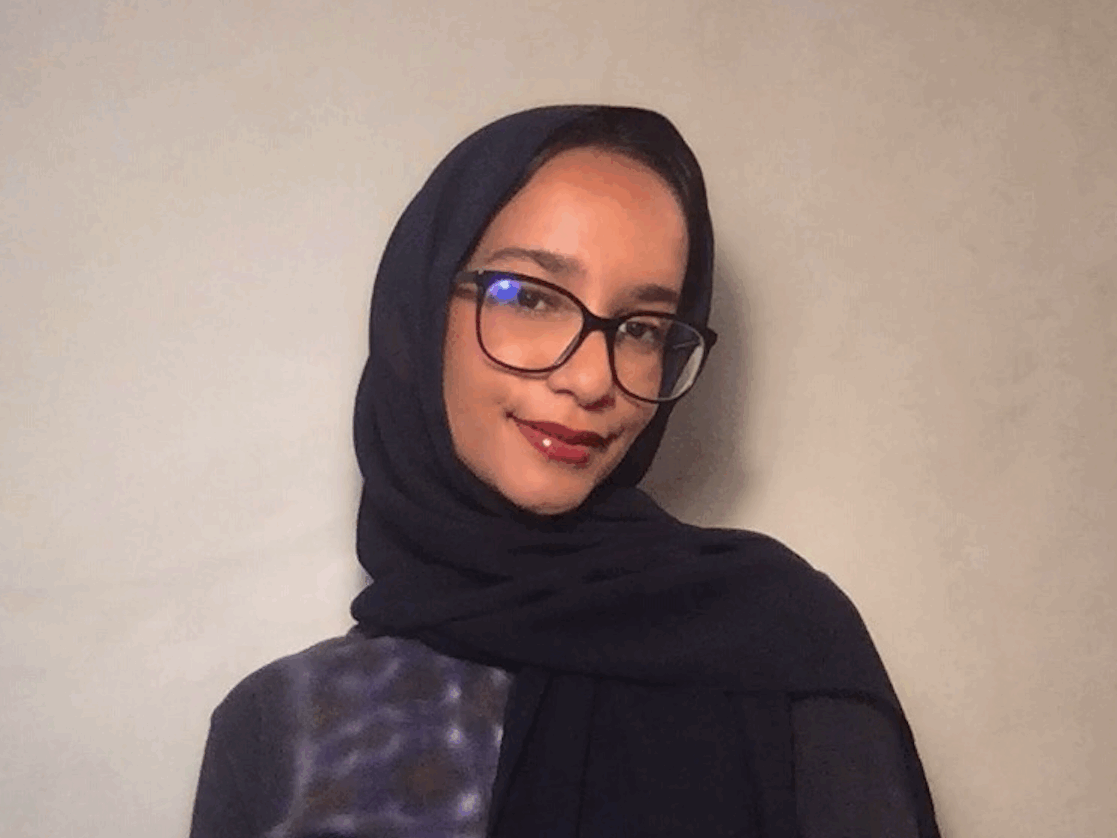
Game credits
We would like to say a huge thanks to Fatema for her amazing and hard work putting together this game.
Fatema Al Khalifa is an Undergraduate Student, studying Politics, Philosophy and Economics at King’s College London.
Mia Couto Game
Coutismos is a playful word-lab inspired by Mia Couto’s A Chuva Pasmada. Explore how new words are born in Portuguese by remixing roots, prefixes, and suffixes—the very techniques Couto uses to craft his memorable neologisms.
Watch the intro video
Watch the conclusion video
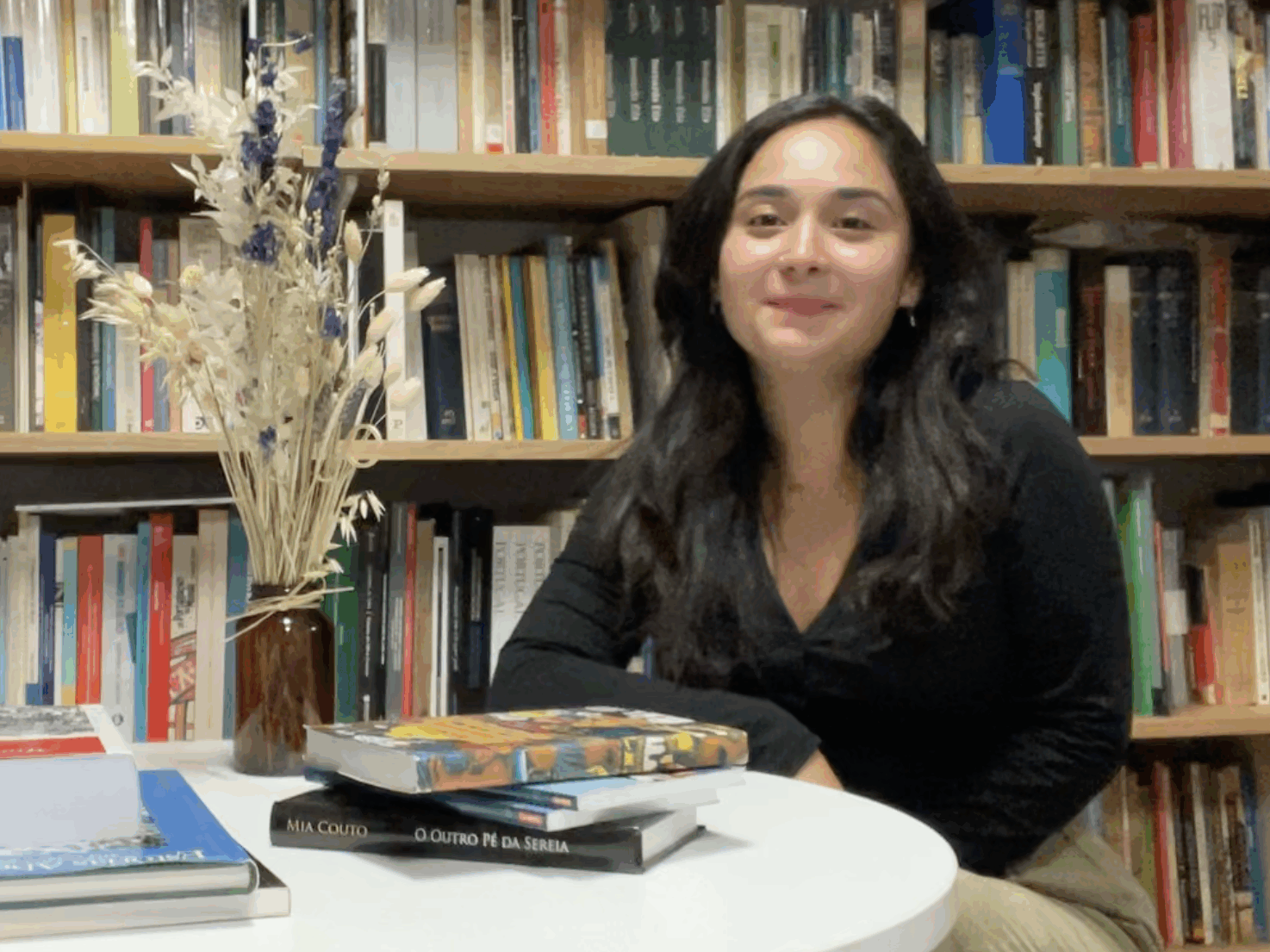
Game credits
A huge shout out to Carolina for her amazing and hard work putting together this game.
Carolina Peixoto is an Undergraduate Student, studying Spanish and Portuguese at King’s College London.
Portuguese around the world
Portuguese around the world

MIRANDESE
Interview with Alfredo Cameirão
Interview summary
Alfredo Cameirão, president of the Association for the Mirandese Language and Culture, argues that Mirandese urgently needs structural protection in Portugal. He first corrects a persistent misconception: Mirandese is not a hybrid of Portuguese and Spanish nor a dialect, but a distinct language that descends from Astur-Leonese, once spoken across the medieval Kingdom of León. When Portugal became independent, political borders did not match linguistic ones; in the north-east (Trás-os-Montes) people continued to speak Leonese—today’s Mirandese—regardless of the new frontier.
On the current situation, Cameirão notes Mirandese should be taught in schools with the same status as other languages. In Miranda do Douro it exists only as an optional subject, brings no curricular advantage and lacks official teaching materials; most resources are created informally by committed teachers. Even so, roughly 80% of pupils choose it—a sign of community demand and of the school’s and teachers’ valuable work.
Portugal needs a dedicated institute or public body “to safeguard the preservation of the language,” coordinating pedagogy, materials, research, certification and cultural promotion.
Stronger legal protection is needed. Portugal signed the European Charter for Regional or Minority Languages in 2021 but has not ratified it. Cameirão urges ratification, pointing out that Miranda do Douro’s municipality has even offered to shoulder any extra costs—such as translation—so there is, in his view, no reason for delay.
He closes with a political reality check: Miranda is geographically distant and demographically small, so its voice carries little weight in Lisbon. For that very reason, national ratification and concrete on-the-ground measures are indispensable to ensure Mirandese remains a living language.